
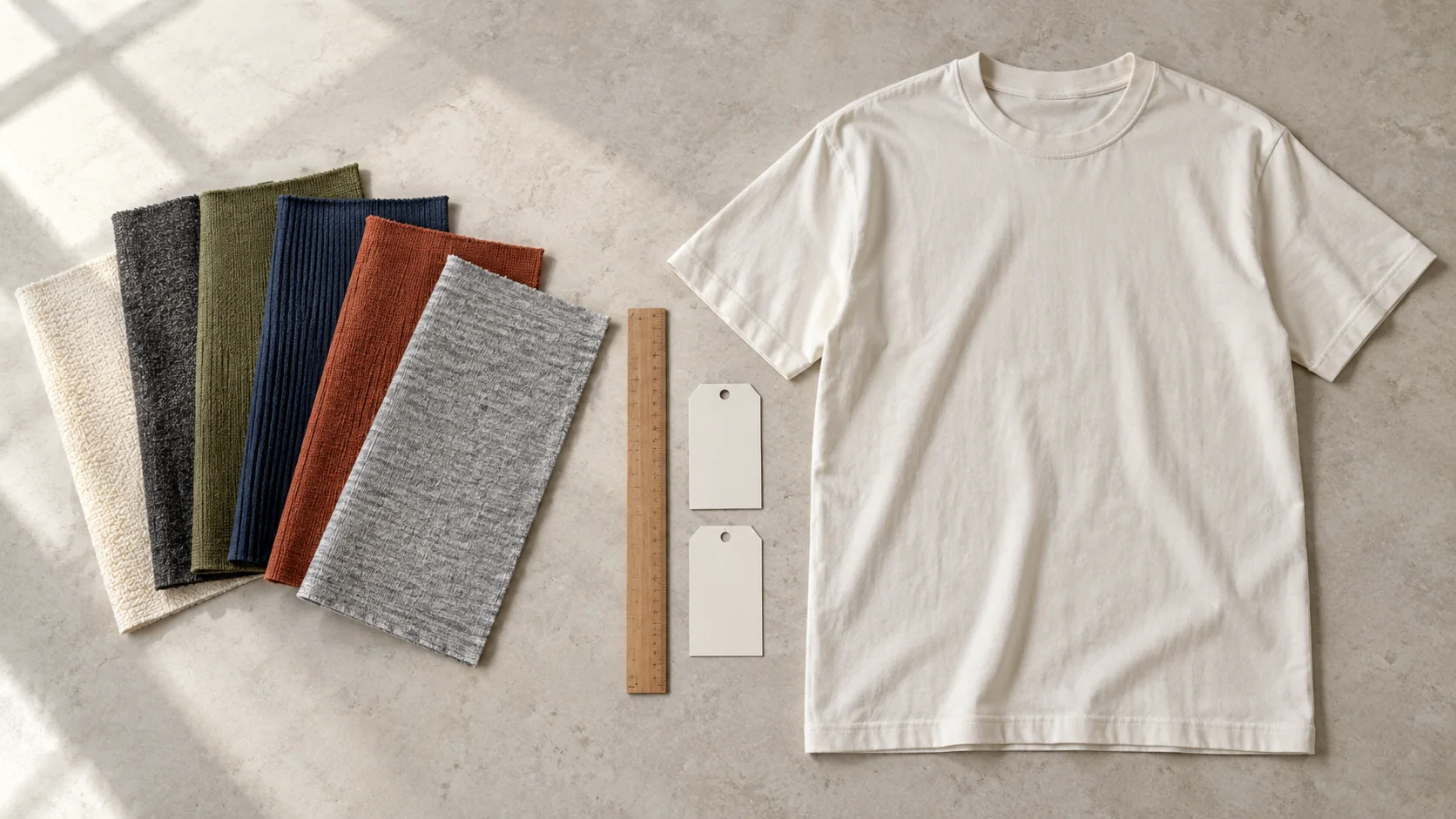
If you are choosing between a fabric swatch book and a garment sample, start with the question you need to answer. Request swatches when you are narrowing down fabric weight, structure, hand feel, stretch, opacity or color direction. Request a garment sample when you need to judge fit, drape, construction, decoration placement and how all materials work together on the actual style. A swatch can shorten fabric selection, but it cannot approve a finished garment. A garment sample can confirm the style more completely, but it is slower and more expensive to make. For most new apparel programs, the practical sequence is: define the product, shortlist fabrics, prepare a usable tech pack, make a development sample, then approve a pre-production or golden sample before bulk production.
Fabric swatch book vs garment sample: the short answer
The two tools answer different sourcing questions. A fabric swatch book helps a buyer compare material options. A garment sample turns selected materials and specifications into a physical product that can be reviewed as a whole.
| Reference | What it helps you decide | What it cannot approve | Best time to request it |
|---|---|---|---|
| Fabric swatch book or sample pack | Fabric family, knit or weave structure, approximate weight, hand feel, stretch, opacity and finish direction | Final fit, construction, print quality, bulk shade or complete garment performance | Early material research or supplier comparison |
| Workmanship sample | General sewing quality, seam execution, neckline construction and finishing capability | Your exact fit, fabric, color, artwork or trim specification | Early supplier qualification |
| Development or fit sample | Silhouette, measurements, construction, fabric behavior and design feasibility | Final bulk lot consistency unless production materials and methods are used | After the style and tech pack are sufficiently defined |
| Size-set sample | Grading and fit across selected sizes | Every colorway or the full bulk production result | After the base size is approved |
| Pre-production or golden sample | Final approved combination of materials, measurements, trims, artwork and workmanship | Every individual bulk garment | Immediately before bulk cutting and production |
This distinction prevents a common mistake: treating any physical sample as approval for everything. Each reference has a defined job, and the approval record should state exactly what was reviewed.
What does a fabric swatch book help you decide?
A good swatch set makes material conversations more specific. Instead of asking for a “heavy cotton,” you can compare visible and tactile differences between jersey, interlock, French terry, fleece or a woven structure. Useful labels should identify the supplier’s internal fabric code and the available specification details, such as fiber content, nominal weight, width, finish and color reference.
Swatches are especially useful for comparing:
- surface texture and visual character;
- approximate thickness and hand feel;
- stretch direction and recovery;
- opacity against light or skin-tone backgrounds;
- drape and stiffness;
- brushed, peached, washed or other finish effects;
- compatibility with the intended season and product position.
However, a small swatch is not a final performance guarantee. It may come from a different dye lot, and its behavior can change after washing, printing or garment construction. Fiber content and performance claims should be confirmed through the agreed specification and appropriate testing when they are important to the product.
For an early-stage brand comparing materials, a curated fabric swatch and sample pack can be a more efficient first step than commissioning several complete garments with uncertain fabric choices.
What does a garment sample prove that swatches cannot?
A garment sample shows relationships that a loose piece of fabric cannot reproduce. It reveals how the material hangs on the body, how the neckline recovers, whether a seam becomes bulky, how a hood or pocket changes balance, and whether a print or embroidery sits correctly on the intended panel.
The value depends on the sample type. A generic workmanship sample can show sewing and finishing capability, but it is not evidence that the supplier has approved your exact product. A development sample made from your measurements and construction details is more useful for fit and design review. A pre-production sample made with approved production-intent materials is the stronger reference for bulk execution.
Before requesting a garment, make sure the factory has the information needed to interpret your design. A clear apparel tech pack for sampling reduces assumptions about measurements, seams, artwork, trims and labeling.
Which reference should you request first?
Use the stage of your project—not a fixed industry rule—to choose the first physical reference.
You are exploring a product idea or comparing suppliers
Start with fabric swatches and, if available, a workmanship sample. You are trying to establish whether the supplier’s material range and construction level fit your direction. Do not expect these references to validate your final design.
You have a defined style and usable tech pack
Request a development or fit sample. Name the chosen fabric code, target weight, color direction, measurements, construction and trim requirements. If the exact fabric is not available for the first round, ask the supplier to identify every substitute so you know which observations are valid.
You are ready to approve bulk production
Request a pre-production or golden sample made as closely as practical to the approved production specification. Use the same document version, measurement chart, artwork files, trims and fabric approvals that will govern bulk production. Record any agreed exceptions instead of relying on messages scattered across email or chat.
If you are still deciding between jersey, French terry or fleece, review this guide to choosing fabric for custom T-shirts and hoodies before locking the first style sample.
How should you review a swatch or sample pack?
Reviewing samples visually is useful, but a repeatable checklist makes feedback clearer and easier to act on.
- Confirm the reference identity. Record the fabric or sample code, date received and supplier. Photograph the label with the material so the reference is not separated from its identity.
- Check the stated specification. Note the declared fiber blend, nominal GSM or weight, structure, width and finish. Separate supplier-declared information from independently verified test results.
- Assess hand and drape. Compare softness, compactness, fluidity and surface character against your intended product and price position.
- Check opacity, stretch and recovery. Use the same simple comparison method for every option. If a performance threshold matters, define a test method rather than relying only on hand stretching.
- Review color and finish under consistent light. Screen colors and phone photos are not reliable substitutes for a physical color approval. Bulk shade may still require a lab dip or production-lot approval.
- Ask about availability and minimums. Confirm whether the swatch represents a stocked fabric, a custom development or an archived reference. Ask about current lead time and minimum order implications.
- Document the decision. Mark the reference as approved, rejected or approved with conditions, and state what the approval covers.
This record can later sit beside your apparel sample approval checklist so the team does not repeat the same decision in every sample round.
What should go into a garment sample request?
A sample request should be specific enough for the supplier to price, plan and execute the same product you are evaluating. Include:
- style name and unique style number;
- intended product type and target customer;
- tech pack version and issue date;
- base-size measurement chart with points of measurement;
- approved or shortlisted fabric code, composition, structure and target weight;
- color reference and any lab-dip requirement;
- seam, stitch, rib, binding and reinforcement details;
- artwork files, dimensions, placement and application method;
- trim, label and packaging requirements;
- the purpose of the sample and the decisions it must support;
- feedback deadline and requested shipping date.
Also identify what can be substituted. For example, a first fit sample may use a stock color but should not quietly switch to a different fabric weight if you intend to judge drape. Stating acceptable substitutions preserves the value of the review while keeping development practical.
Common mistakes when approving swatches and samples
Approving fabric from a phone photo
Photography, screens and room lighting can change perceived color and texture. Use images for communication, but base important color and hand-feel decisions on a controlled physical reference.
Receiving unlabeled swatches
An attractive swatch without a traceable code cannot reliably be reordered or connected to a quotation. Ask for every material and sample to carry a unique identifier.
Treating a workmanship sample as your style sample
A well-sewn blank T-shirt can demonstrate general capability. It does not confirm your measurements, selected fabric, wash, artwork or trims. Label the review as a supplier-capability check, not a product approval.
Assuming the swatch guarantees the bulk dye lot
A swatch establishes direction. Bulk fabric may require a lab dip, strike-off, lot cutting or other approval depending on the material and color process. Define the approval point before production.
Changing several variables without version control
If fabric, measurements, artwork and trims all change between rounds, feedback becomes hard to isolate. Number every sample round and record changes against a single current specification.
A practical approval sequence for a new apparel style
The following sequence works for many custom apparel programs, but it should be adjusted for product risk and complexity:
- Define the product. Set the intended silhouette, use case, target price position and critical performance requirements.
- Shortlist material references. Compare labeled swatches and narrow the options that fit the product direction.
- Issue the development specification. Send the current tech pack and state which materials or details are provisional.
- Review development and size-set samples. Measure the garment, assess fit and construction, test critical details, and issue consolidated comments.
- Approve a production-intent reference. Sign off the pre-production or golden sample together with the final specification before bulk cutting.
Keep the approved physical sample, measurement record and change log available during production inspection. They help align buyer, merchandiser, pattern team, sewing line and quality team around the same reference. For a broader view of manufacturing controls, see Yinuo Apparel’s quality process overview.
Frequently asked questions
Can fabric swatches replace a garment sample?
No. Swatches can support material selection, but they cannot confirm finished fit, garment balance, construction, decoration placement or the interaction between fabric and trims.
Should I request a sample pack before creating a tech pack?
It can be useful during early material exploration, especially when fabric weight and structure will shape the design. However, a sample pack does not replace a tech pack. The factory still needs clear measurements, construction, artwork and trim instructions to make your style.
Does an approved swatch guarantee the bulk color?
No. It establishes a color and material direction. Depending on the process, the bulk order may need a lab dip, strike-off or production-lot approval, with an agreed tolerance for shade variation.
How many garment sample rounds should a buyer expect?
There is no universal number. The required rounds depend on specification quality, product complexity, fit risk and the extent of each revision. Consolidated feedback and strict version control usually reduce unnecessary repetition.
Choose the reference that answers the next decision
The fabric swatch book vs garment sample choice is not an either-or decision for the entire project. It is a sequence. Use swatches to reduce material uncertainty, use development samples to resolve fit and construction, and use a production-intent sample to control the final handoff to bulk manufacturing.
If you are still narrowing fabric and workmanship options, request a sample pack. If your style and specifications are already defined, contact Yinuo Apparel with the tech pack, target quantity and required sample stage so the team can review the next practical step.