
An apparel bill of materials (BOM) identifies the materials and components needed for a garment, including their specifications, placement, quantities and applicable variants. To build one that a supplier can use, give each item a stable reference, state the unit of measure and connect it to the approved sample or specification. Record unresolved choices explicitly rather than letting an empty cell become permission to substitute.
For a buyer, the practical goal is simple: the quoted, sampled and ordered product should describe the same materials. A photograph of a navy sweatshirt cannot specify its body fabric, rib, thread and labels on its own. A useful BOM makes those decisions visible before purchasing or production begins.
What does an apparel BOM cover—and what does it not?
List physical inputs such as shell fabric, lining, interlining, rib, thread, elastic, closures, labels and packaging where applicable. Separate component groups so a reviewer can check them against the actual garment. PTC describes a manufacturing BOM as a detailed list of materials, components and subassemblies needed to manufacture a product. The apparel fields below are a practical buyer template, not a prescribed universal standard.
A BOM is part of the product information set, not a replacement for the whole tech pack. Keep measurements, construction drawings, artwork and testing requirements in their appropriate documents, and link to their current revisions. For example, a label row identifies the label and its placement; its artwork file contains the actual approved text and layout.
Likewise, a BOM is not a complete garment quotation. Materials may feed the costing calculation, while labor, decoration processes, testing, freight and other agreed charges need separate treatment. Use the custom clothing cost drivers guide when comparing the commercial scope behind different offers.
Build the file around identifiable components
Put the style code, description, revision, issue date, development stage and owner at the top. State whether the file is for quotation, sampling or production release. Then assign each distinct component its own row. Keep the item identifier stable when editing its description so comments and supplier responses remain traceable.
| Field group | What to record | Buyer check |
|---|---|---|
| Identity and placement | Item code, component name, garment location | Can the reviewer locate this item on the garment? |
| Technical definition | Material reference, composition, structure, dimensions or relevant specification link | Does the description distinguish it from similar alternatives? |
| Variant mapping | Colorway, size range and any market-specific version | Which finished variants use this row? |
| Quantity and unit | Consumption basis, unit and quantity per garment or defined pack | Is this net use, purchasing allowance or an estimate? |
| Source and evidence | Supplier reference, swatch or artwork revision, approval record | Can the exact approved item be retrieved? |
| Status and control | Open issue, approver, approval date and substitution rule | Is the item actually released for the intended activity? |
Do not fill unknown supplier codes, compositions or consumption figures with guesses. Mark the entry “to confirm,” name the person responsible and set a decision deadline. A quotation can proceed on a clearly stated assumption; production release requires the relevant open decisions to be resolved or explicitly controlled.
Specify more than color and a material nickname
“Navy rib” does not identify one interchangeable material. Add the material reference and the properties relevant to the design, such as knit structure, composition, width and agreed performance requirements. Link to an approved physical reference when appearance or handle matters. For cuff and hem components, use the rib trim specification guide to frame the discussion.
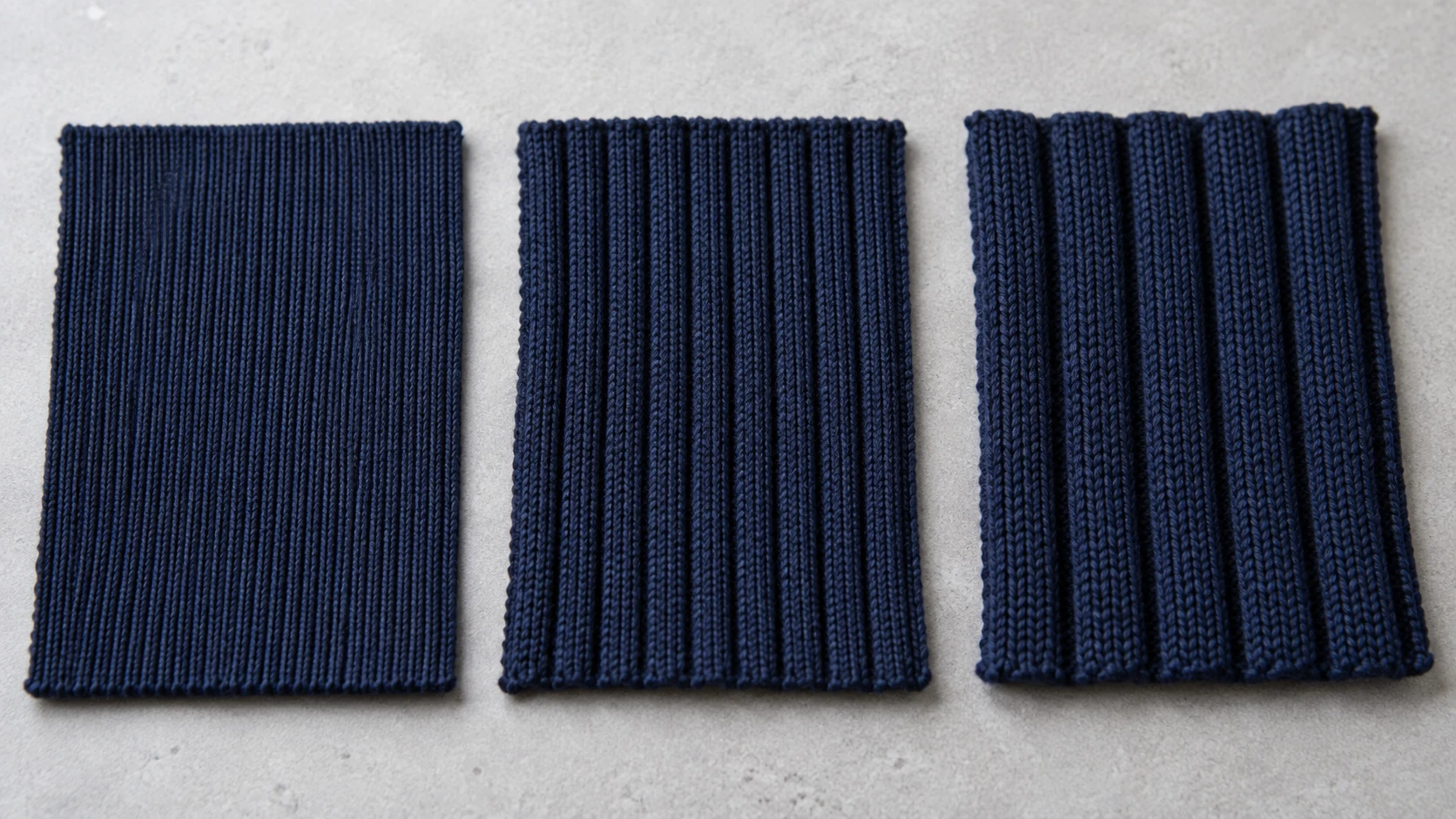
Apply the same discipline to thread, buttons, zippers and labels. A supplier item number is useful only if both parties can retrieve its definition. Avoid relying on a filename such as “latest label”; record an identifiable revision and reference the selected clothing label construction as well as the artwork.
Make quantities and units unambiguous
Define the basis before adding numbers. Does one row mean meters per garment, kilograms per garment, pieces per garment or cartons per shipment? Distinguish a purchased component from a cut part: two cuffs cut from rib fabric do not automatically mean two purchased pieces of rib. Document the conversion if purchasing and production use different units.
For fabric, ask the supplier to confirm consumption against the relevant width, pattern, size mix and cutting assumptions. Keep net consumption separate from any agreed allowance, and explain whether that allowance is already included. A blanket percentage copied from another style is not evidence for this order.
Illustrative arithmetic: if an approved design uses one brand label per garment, 600 garments require a net 600 labels. If the parties separately agree 12 additional labels for setup or replacement, the resulting requirement is 612. These invented figures explain the calculation only; they are not a recommended allowance. Check purchasing minimums, usable stock and order rounding separately.
Map colorways, sizes and packaging explicitly
A shared component can serve several variants, but record the mapping. A brand label might remain unchanged while a size label, thread color or care-label version differs. If a component changes with size, specify the applicable sizes rather than assuming one base-size entry covers the full order.
Packaging needs its own basis too. An individual garment bag, a multi-piece retail pack and a shipping carton are different levels. State the pack configuration and link it to the packing instructions. The retail-ready packaging checklist helps identify details that would otherwise remain outside the material discussion.
Control substitutions and revisions before release
Define who can approve a replacement and what evidence is needed. A visually similar fabric or trim should not silently replace the approved item. Check the proposed change against fit, appearance, construction, care information, cost and schedule as relevant. Record the decision even when the replacement is accepted.
For each revision, log the changed row, old and new references, reason, approver and effective order or batch. Check whether material has already been bought, cut or used. PTC’s BOM management overview emphasizes change traceability and configuration management; a small team can apply that principle with a controlled file and change log without buying a particular software product.
Before production release, reconcile the BOM with the approved sample, technical specifications, artwork, quotation and purchase order. Resolve conflicting references rather than choosing whichever document arrived last. Keep superseded files identifiable and tell the relevant parties which revision is active.
Apparel bill of materials: buyer questions
Can a spreadsheet work instead of PLM software?
Yes, for a manageable project if ownership, access, revisions and approval records are controlled. The key is that everyone works from the same released information. More variants and collaborators may make dedicated systems useful, but a tool does not resolve missing specifications.
Who confirms material consumption?
Agree the responsibility in the development workflow. The buyer defines the intended product; the supplier’s relevant technical team should validate manufacturing consumption and explain its assumptions. Do not treat a buyer’s early estimate as a confirmed purchasing requirement.
Does an approved BOM prove product compliance?
No. It identifies the intended inputs and their references. Applicable testing, labeling review and other compliance evidence must be evaluated separately for the actual product and market. An approval status is not a test report or certification.
To review an apparel bill of materials with Yinuo Apparel, send the style reference, component list, color and size breakdown, technical files and target quantity. Identify which rows are approved and which need sourcing options. That gives the supplier a defined starting point for sample planning and a scope-matched quotation.