
Custom clothing cost is driven by the complete production specification—not by garment type alone. Fabric consumption, construction operations, decoration, trims, order fragmentation, sampling, quality checks, packaging and delivery scope can all change the final commercial picture. A useful cost review therefore asks two questions: what physical work does this design require, and which services sit inside or outside the quoted unit price?
For buyers, the practical goal is not to force every product to the lowest possible price. It is to identify the details that create cost, decide which ones protect the product concept and replace only the details that do not add enough customer value. This guide provides a specification-led framework for doing that before an RFQ or sample revision.
The custom clothing cost stack at a glance
A unit price is the result of several linked inputs. Some are recurring for every garment; others are one-time, order-level or service costs. Treating them separately makes the main cost drivers easier to discuss.
| Cost area | Typical inputs | Buyer evidence to provide |
|---|---|---|
| Material | Composition, construction, GSM, width, finish, color route and expected consumption | Fabric specification, approved swatch or performance requirement |
| Cut and sew | Pattern pieces, seams, pockets, panels, lining and finishing operations | Technical drawings, construction callouts and reference sample |
| Decoration | Method, artwork size, color count, stitch coverage, placements and setup | Vector artwork, dimensions, color references and placement map |
| Trims and branding | Rib, zippers, drawcords, labels, patches, buttons and custom hardware | Bill of materials with material, size, color and branding details |
| Development | Pattern work, sample stages, revisions and sample couriers | Sample plan, approval owners and feedback deadlines |
| Quality scope | Testing, measurement checks, inline review and final inspection | Test list, tolerances, inspection level and acceptance standard |
| Packing and delivery | Folding, bags, retail labels, cartons, shipment terms and destination | Packing manual, carton requirements and named delivery basis |
1. Fabric cost starts with consumption, not only price per kilogram
Fabric is often a major physical input, but the relevant question is how much approved material the style consumes. GSM, usable width, shrinkage allowance, pattern shape, size mix and marker efficiency can change consumption. A lower material rate does not automatically create a lower garment cost if the fabric is narrow, unstable or creates more cutting waste.
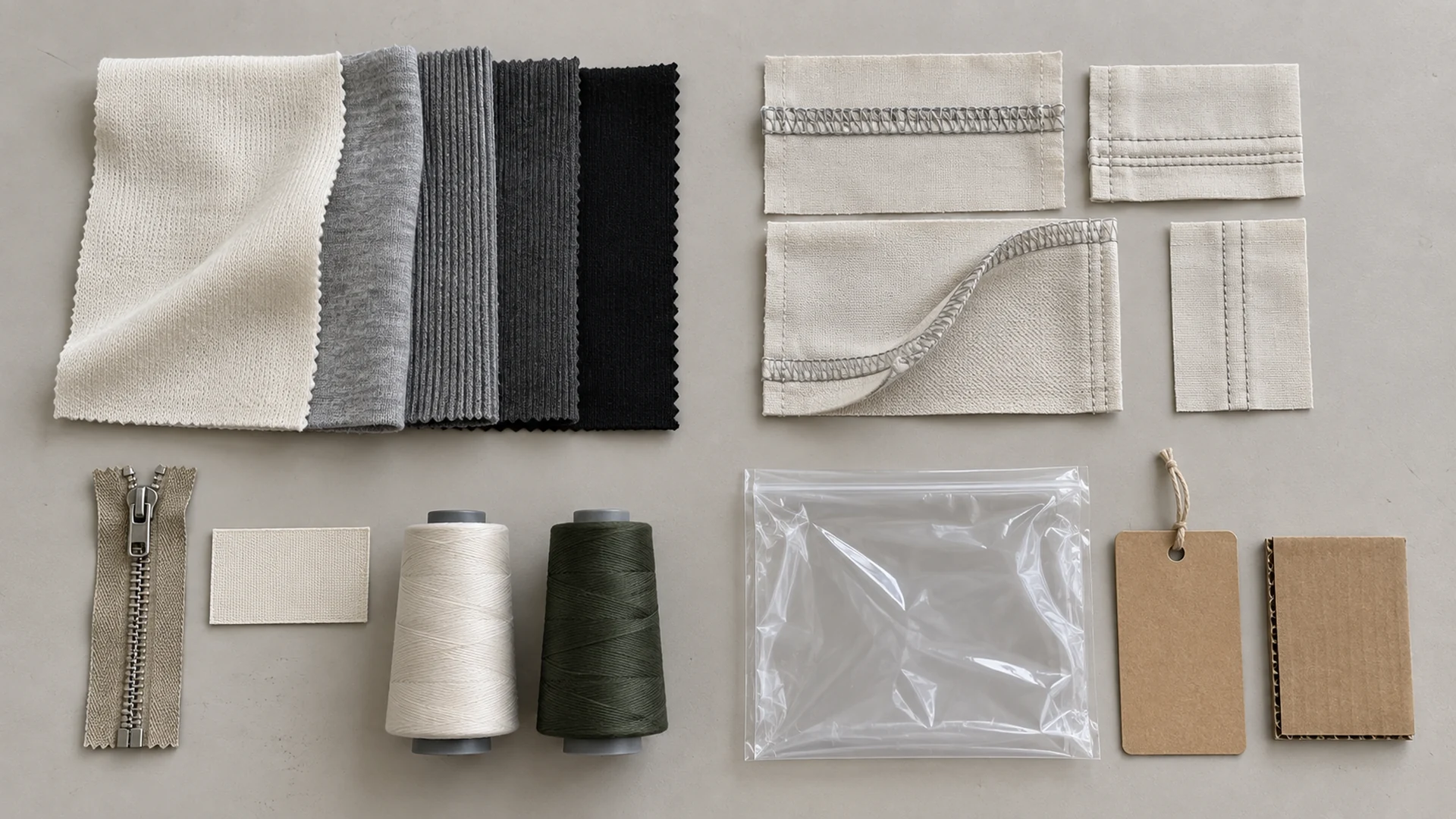
Ask the manufacturer to state the fabric basis used for the estimate: composition, knit or weave, target weight, usable width, finish and whether the source is stock or custom-developed. If the color or finishing route changes after sampling, request a revised consumption and quotation basis. Use a fabric swatch book and garment sample for different approval decisions; a small swatch can confirm direction, while a full garment reveals behavior in construction and fit.
2. Construction cost follows operations and handling
Two sweatshirts made from similar fabric can require different production effort. Extra panels, lined hoods, welt pockets, bound seams, matched stripes, topstitching, reinforcement and difficult materials add operations or handling. Curved seams and small components may also require more control than long, accessible seams.
Make the construction visible in the apparel tech pack. Front and back drawings alone are rarely enough: add seam types, stitch appearance, pocket construction, edge finish and inside views where they change the work. Do not use stitch count as a general proxy for quality. The appropriate construction depends on fabric behavior, function and the intended appearance.
3. Decoration has both setup and repeatable work
Decoration cost depends on the process and artwork, not simply the word “print” or “embroidery.” Size, coverage, colors, placements, stitch density, specialty inks, underbase requirements and registration difficulty can matter. Setup items such as screens, digitizing or molds may be treated separately from the repeatable application on each garment.
For a useful estimate, provide final artwork or a clearly marked reference with finished dimensions and placement. If several techniques could achieve the same visual objective, ask for one base route and separately priced alternatives. This lets the brand compare appearance, hand feel, durability and cost without changing several variables at once.
4. Trims can create minimums, tooling and coordination work
Custom zippers, molded pullers, branded buttons, woven labels, drawcords, rib and patches may involve their own supplier minimums or development steps. A small garment order does not always reduce the purchase commitment for every component. Color matching across fabric and trims also requires clear approval references.
List every component in a bill of materials and identify whether it is standard, color-matched or custom-branded. A value-engineering option might keep a visible branded puller while moving a hidden component to a qualified standard item. The decision should be deliberate and documented, not a silent substitution.
5. Color and size fragmentation changes efficiency
An order total does not show how that volume is divided. Multiple colors can require separate dye lots, decoration setups, labels or packing identification. A broad size range can change marker layouts and material consumption. The operational effect depends on the style, material and factory route, so it should be reviewed rather than assumed.
Provide a style-color-size matrix with the RFQ. If the commercial plan is still flexible, compare a few realistic distributions rather than asking for one price against an undefined mix. The guide to planning apparel MOQ by color and size explains how to make this matrix usable for sourcing and production review.
6. Sampling cost depends on what must be proven
Sampling is development work, not merely a small bulk order. Pattern creation, substitute materials, custom decoration trials, repeated fit corrections and international couriers can sit outside the production unit price. The number of samples required should follow the product risks and approval plan.
Define what each sample must approve, who provides consolidated feedback and which changes reopen an earlier decision. Use an apparel sample approval checklist to keep fit, measurements, materials, construction, decoration and labeling aligned. Clear feedback does not remove development work, but it reduces avoidable rounds caused by conflicting or incomplete comments.
7. Quality requirements need a defined scope
Testing and inspection are not interchangeable. A material test answers a specific performance question; measurement checks compare garments with the approved specification; inline review monitors work during production; and final inspection evaluates finished goods using an agreed method. Buyer-specific protocols, third-party laboratories or inspection companies can add separate charges and lead-time dependencies.
State the required tests, measurement tolerances, inspection timing, sample size or inspection standard, and who bears each cost. Avoid vague requests for “full testing.” A focused requirement tied to product use and destination is easier to quote and approve. Legal or market-specific compliance should be confirmed with an appropriate specialist for the destination market.
8. Packaging and logistics can sit outside the product price
Individual bags, tissue, hangtags, retail stickers, inserts, carton ratios and shipping marks add materials and handling. Carton dimensions and weight can also affect downstream freight calculations. The quotation should identify the named delivery basis and point so the buyer can see which transport, insurance, duties, taxes or destination charges remain outside the supplier’s scope.
Define the retail-ready packaging requirements before final pricing and align them with the carton marks and packing-list workflow. Duties, taxes and customs treatment vary by product and destination; confirm landed-cost assumptions with a qualified freight forwarder or customs adviser.
A cost-driver worksheet for design review
Before requesting a new quote, review each proposed change against the same four questions. This creates a compact decision record and gives the manufacturer enough context to suggest feasible alternatives.
| Question | What to record |
|---|---|
| What changes physically? | Material, pattern piece, operation, decoration, trim, packing item or service |
| Is the change recurring? | Per garment, per color, per artwork, per order or one-time development |
| What customer value does it protect? | Fit, function, appearance, durability, brand identity or retail requirement |
| What evidence closes the decision? | Updated tech pack, swatch, strike-off, trim sample, garment sample, test or packing mock-up |
How to value-engineer without losing the product
- Freeze the product objective first. Identify the fit, hand feel, function and visible brand cues that must remain.
- Change one cost driver at a time. This makes the effect on appearance, performance and price easier to evaluate.
- Request like-for-like options. Ask the supplier to state exactly what changes in each alternative.
- Reapprove affected evidence. A fabric, trim or construction change may require an updated sample, test or measurement review.
- Keep commercial and technical versions aligned. The quotation, tech pack, bill of materials and approved sample should describe the same route.
Common costing mistakes
- Requesting a production price from a mood image with no material, construction or quantity basis.
- Comparing a stock-fabric option with a custom-developed fabric as if the scope were identical.
- Changing artwork size or placements after decoration setup has been estimated.
- Giving only the total quantity and omitting the style-color-size breakdown.
- Leaving testing, retail packing, inspection and delivery terms undefined.
- Approving a cheaper alternative in email but not updating the controlled specification.
Frequently asked questions
What information is needed for an accurate custom clothing estimate?
Provide the garment type, technical drawings, material specification, measurements, construction notes, artwork with dimensions, trim list, style-color-size quantities, sample requirements, quality scope, packing instructions, delivery basis and destination. Open decisions should be labeled clearly so the supplier can price defined options.
Does a higher MOQ always reduce the unit price?
Not automatically. Higher volume can spread some setup work and improve production efficiency, but the result still depends on color and size fragmentation, material commitments, construction, decoration and capacity. Ask for the assumptions behind each quantity tier.
Which design details are usually worth reviewing first?
Start with fabric route and consumption, high-operation construction details, large or multi-placement decoration, custom trims and fragmented color quantities. The best opportunity is product-specific: preserve the details customers notice or rely on, then review lower-value complexity.
Why can the final price change after sampling?
Sampling may reveal revised consumption, additional operations, different trim requirements or artwork changes. The final specification can therefore differ from the early estimate. Require a revision note showing what changed and update the quotation before approving bulk production.
Prepare a cost-ready RFQ
A useful RFQ connects the commercial plan to a controlled product specification. Send the product type, target quantities by color and size, material direction, measurements, construction details, artwork, trims, sample plan, quality requirements, packing scope, delivery basis and destination. Ask for assumptions and exclusions to be stated separately.
For a feasibility and costing review, contact Yinuo Apparel with your tech pack, quantity matrix, fabric direction, artwork files and target delivery market. A complete brief makes it easier to identify the real cost drivers and discuss alternatives without weakening the intended product.