
A realistic apparel sampling timeline starts when the brief is ready and ends when the required approval evidence is complete. Plan material readiness, pattern work, sample construction, dispatch, transit, buyer review and any revision round as separate tasks. Give every approval an owner and a deadline, and connect the tasks that cannot start until another decision closes. The longest dependent sequence determines the earliest credible approval date.
For a clothing brand preparing a launch, this makes the sampling plan more useful than a single “sample ready” promise. It shows whether a late fabric decision, an unavailable fit reviewer or another courier journey will move the date. The framework below focuses on development through pre-production approval; use the broader apparel production lead-time guide to connect that approval with bulk manufacturing and delivery.
Define what the timeline must deliver
Name the endpoint before asking how many days sampling will take. A first prototype, an approved fit sample, a confirmed size set and a production-ready pre-production (PP) sample answer different questions. A prototype made with substitute fabric may support a silhouette review without closing hand feel, shrinkage, color or final construction decisions.
Agree the sample purpose, required material fidelity, size coverage, decoration scope and evidence needed to pass each gate. Record any permitted substitutions and the approvals they leave open. Your schedule should show both “sample dispatched” and “sample approved”; they are separate milestones with separate owners.
Set a meaningful day zero
Begin the committed schedule after the supplier has accepted the development inputs and confirmed the conditions for starting. Depending on the agreement, these may include sample fees, reference garments, approved artwork or material instructions. Sending an incomplete email is not a reliable start point for pattern and sourcing work.
- Current tech-pack revision, drawings, construction details and measurement method.
- Base size, intended fit, size range and reference sample where available.
- Fabric composition, construction, weight, finish and stock or custom sourcing route.
- Artwork files, finished decoration dimensions, placements and color references.
- Trim and label requirements, with unresolved items explicitly listed.
- Sample stages, review owners, delivery addresses and the target approval date.
Use an apparel tech pack prepared for sampling as the shared reference. Ask the supplier to return a short readiness review: accepted inputs, missing decisions, material risks and the earliest feasible start. Keep the planned start date provisional until those dependencies are resolved.
Build the schedule around tasks and evidence
| Milestone | Dependency to check | Evidence that closes the step |
|---|---|---|
| Material readiness | Approved route and sample quantity available | Material reference, availability confirmation and stated substitutions |
| Pattern and first sample | Current measurements, construction and usable sample material | Sample ID, measurement report and construction notes |
| Dispatch and receipt | Sample checked and courier details confirmed | Tracking reference and actual receipt date |
| Buyer review | Physical sample and relevant reviewers available | One consolidated comment sheet with approval status |
| Revision or targeted check | Correction scope agreed | Revised sample or specifically agreed supporting evidence |
| PP approval and handoff | Required fit, material, trim and decoration decisions closed | Dated approval, controlled specification and retained reference |
Add planned finish, actual finish, responsible person and next dependency to each row in your working tracker. Distinguish an estimate from a confirmed booking. A material supplier’s expected completion date and the date usable fabric reaches the sample room may differ; both matter when the sewing slot depends on arrival.
Which work can happen in parallel?
Some activities can overlap when their inputs are stable. A factory may prepare a base pattern while sourcing fabric, and a buyer may review label artwork while a fit sample is being made. Overlap shortens the plan only when the later task can use that work without an unresolved decision forcing it to restart.
Mark every overlap with its assumption. Pattern preparation with provisional shrinkage, for example, may need correction when final fabric behavior is known. Decoration trials on a substitute material may not establish appearance on the production fabric. Compare the roles of swatches and garment samples before treating an early material review as full garment approval.
A worked example of an apparel sampling timeline
The following is a planning example using invented durations to explain the calculation. It is not a Yinuo Apparel lead-time offer or an industry benchmark. All values use one shared working-day calendar; a live plan must replace them with supplier estimates, courier dates, weekends and the relevant holidays.
| Task | Illustrative duration | Dependency |
|---|---|---|
| Sample material readiness | 6 working days | Complete brief accepted |
| Pattern preparation | 4 working days | Complete brief accepted; runs alongside material preparation |
| Make and check first sample | 3 working days | Both material and pattern ready |
| Dispatch and transit | 3 working days | First sample checked |
| Buyer review | 2 working days | Sample received |
| Agreed revision work | 4 working days | Consolidated comments accepted |
| Revised-sample transit | 3 working days | Revision checked |
| Final review | 2 working days | Revised sample received |
The first two tasks overlap, so their contribution is the longer duration: max(6, 4) + 3 + 3 + 2 + 4 + 3 + 2 = 23 working days. Adding both parallel tasks would overstate the sequence; omitting transit or review would understate it. If buyer review takes five days instead of the assumed two, the sequence increases by three days unless another dependent activity can be shortened.
This example includes one revision cycle only. If a production-intent material, size set, decoration approval or separate PP sample is still required, add that work and its dependencies. Place a visible contingency allowance against identified risks; do not hide it inside each task or count the same allowance twice.
Reserve buyer review time before the sample ships
Review time belongs in the schedule as clearly as cutting and sewing time. Book the fit reviewer, product developer and final decision maker before dispatch. Confirm whether the review needs a fit model, wash assessment, physical color comparison or another person who may be unavailable when the parcel arrives.
Use one comment sheet per sample revision. Include sample ID, tech-pack version, receipt date, issue, required action, responsible owner and decision deadline. Separate a correction to an agreed requirement from a new design request. Contradictory comments sent through several conversations make it difficult to estimate the next round or know which instruction controls.
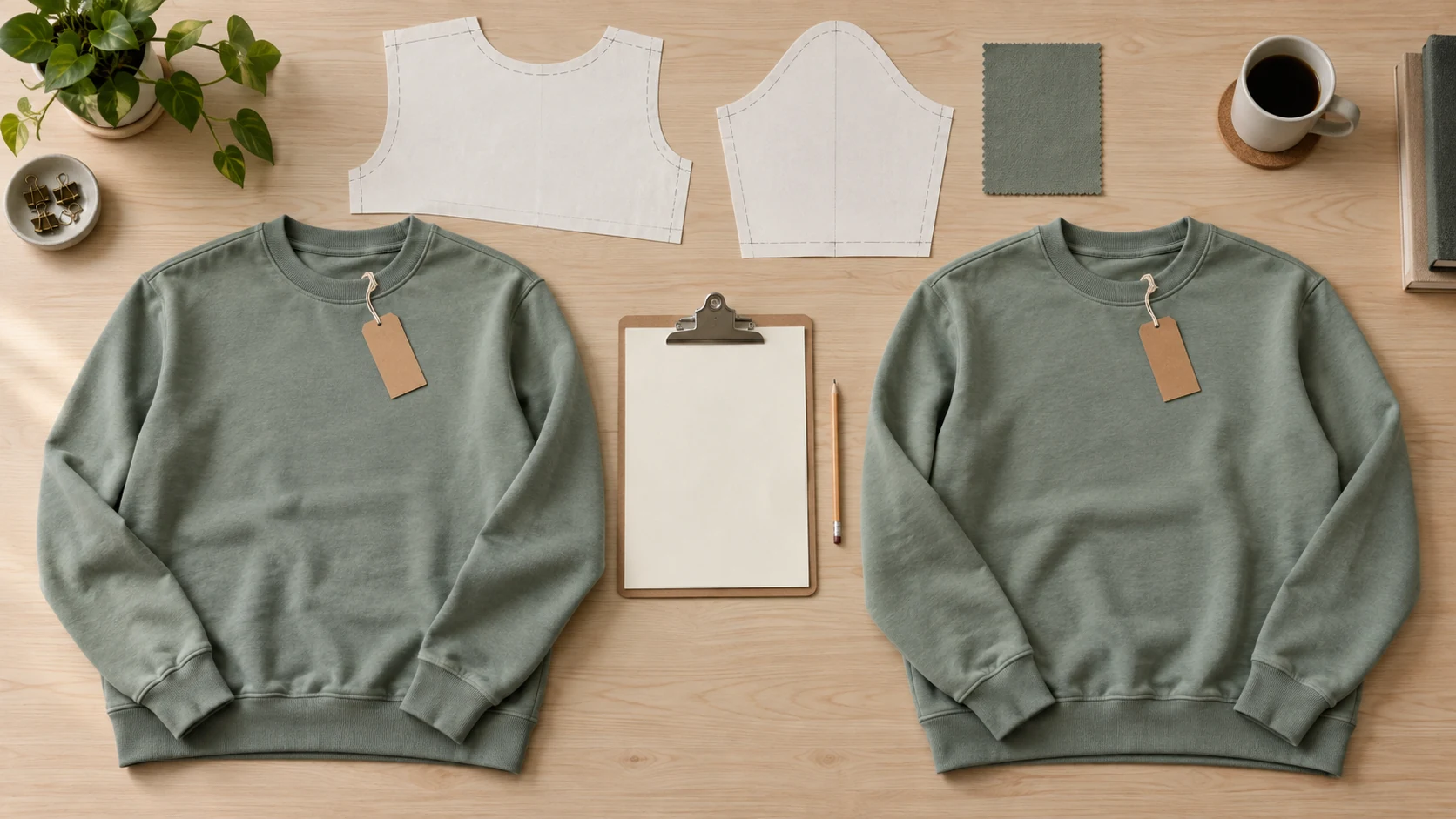
The sample approval checklist helps organize the review. For measurement comments, identify the point of measure, method, observed value and target rather than simply asking for “a better fit.” Finish with a clear status: approved for the stated purpose, revise and resubmit, or an explicitly limited approval with named open items.
Decide what needs another physical sample
Agree how each correction will be verified. A label-layout change may be reviewable through artwork or a physical label sample, depending on the requirement. A change to fit, balance, material behavior or construction may need another garment. The correct evidence depends on the issue and the risk of proceeding without seeing the revised result.
A photo can document visible placement or an identified construction detail, but it cannot fully establish tactile hand feel or how a garment fits the intended wearer. If a targeted check replaces a complete resample, document exactly what it approves and what remains open. Do not let approval for one purpose silently become authorization for unrelated bulk work.
Work backward from the bulk-readiness gate
Start with the required date for the approved sample and specification to reach production planning. Work backward through the dependent tasks using confirmed working calendars. Then connect the result to the launch plan, including material purchasing, manufacturing, inspection, transport and receiving activities that sit after development.
Check whether bulk materials or capacity must be reserved before all development decisions close. If so, identify the commercial exposure and obtain an explicit decision on that commitment. Sample approval does not by itself reserve production capacity. Keep the schedule, order assumptions and custom clothing cost drivers aligned when revisions affect operations, materials or services.
How to respond when a milestone slips
- Locate the dependent task. Ask which next activity is blocked and what exact input would release it.
- Update the remaining sequence. Recalculate affected dates using actual completion and realistic remaining work.
- Compare specific recovery options. These might include an approved available material, an earlier review appointment or a confirmed alternative courier service.
- Record the trade-off. State the cost, product change, evidence required and decision owner for each option.
- Issue one revised baseline. Keep the old dates in the history and identify the version now used by all parties.
For example, a delayed custom rib may block a production-intent PP sample while a separately approved fit review can continue. That helps only if the substitute is suitable for the limited fit purpose and final rib approval remains visible. Rushing an incomplete approval can merely move the unresolved problem into bulk production.
Close development with a controlled handoff
At the final gate, match the approved sample ID with the tech pack, measurement chart, material references, artwork, trim list and outstanding exception log. Record the approval date and the person authorizing the next stage. Give the sample room and production team access to the same version.
Use golden sample management to retain the agreed physical reference. A timeline is complete when the agreed development evidence is closed and handed over, rather than when the final parcel leaves the factory.
Frequently asked questions
How long does apparel sampling take?
There is no dependable universal duration. The plan depends on brief readiness, material availability, garment complexity, sample-room capacity, delivery routes, buyer review and required revision stages. Ask for a task-level schedule with assumptions and a defined approval endpoint.
Should courier time count as sampling lead time?
Yes, when the milestone is buyer approval. Record dispatch, expected delivery, actual receipt and review separately. If a supplier quotes factory completion only, add the remaining steps before using that date in the launch plan.
Can development continue while a sample is being reviewed?
Work with stable inputs can sometimes continue. Identify the assumption and any rework exposure before overlapping tasks. Activities that depend on the pending fit, material or artwork decision should remain conditional.
How much contingency should a buyer add?
Base the allowance on unresolved risks and available recovery options. New fabric development, complex fit, unconfirmed trims and several approval owners can require different allowances from a repeat style. Record the reason for the allowance instead of applying an unexplained percentage to every project.
Request a schedule the supplier can assess
For a useful apparel sampling timeline, send Yinuo Apparel your current tech pack, sample objectives, material route, required sizes, artwork and trims, review owner, delivery location and target approval date. Identify fixed launch constraints and open product decisions. Ask the team to return dependencies, provisional durations, review windows and the evidence required at each gate.