
AQL garment inspection uses an agreed sampling scheme to support a decision about a defined production lot. Before inspection, the buyer and supplier should confirm the lot, standard and edition, inspection level, inspection severity, sampling type, quality limits and defect-counting rules. The resulting sample size and acceptance numbers belong in the written inspection instruction.
For clothing brands, the practical question is whether the report supports a release decision for the actual shipment. A passing result does not establish that every garment is defect-free, and a quality-limit number alone does not define a complete inspection. This guide explains what to agree, what to check in the report and how to handle a failed result.
What does AQL mean in garment inspection?
AQL stands for acceptance quality limit in ISO 2859-1. It indexes sampling schemes used for lot-by-lot inspection by attributes. ISO lists ISO 2859-1:2026 as the current edition, replacing the 1999 edition and its amendments. Specify the edition in the purchase or inspection agreement; an old spreadsheet should not silently determine the procedure for a new order.
A statement such as “AQL 2.5” does not authorize shipping exactly 2.5% defective garments. It does not supply the sample size, define a defect or prove the defect rate of a particular lot. Those details require the selected scheme and the agreed inspection scope. NIST explains that acceptance sampling supports lot disposition rather than estimating lot quality.
Agree these inputs before booking an inspection
| Input | What the buyer should record | Why it matters |
|---|---|---|
| Lot definition | Order, styles, colors, sizes, quantity and production scope | Establishes which goods the result represents |
| Standard and edition | Named procedure and version | Prevents mixing tables and rules from different sources |
| Inspection level | The agreed level for the relevant check | Contributes to sample selection under the scheme |
| Inspection severity | Normal, tightened or reduced where applicable | Must follow the scheme and relevant inspection history |
| Sampling type | Single, double or another specified plan | Determines whether additional samples form part of the procedure |
| Classification and counting | Defect definitions, quality limits and counting basis | Makes acceptance numbers interpretable |
| Additional checks | Measurements, tests, labels, assortment and packing scope | Prevents a workmanship result from masking incomplete checks |
| Release authority | Who decides and what evidence must be complete | Separates inspection findings from shipment authorization |
Ask the inspection provider to return the selected code letter where applicable, sample size and acceptance/rejection numbers before the visit. Verify these against the agreed standard and edition. This article does not reproduce a sampling table; use the authorized standard and a competent quality professional for the actual plan.
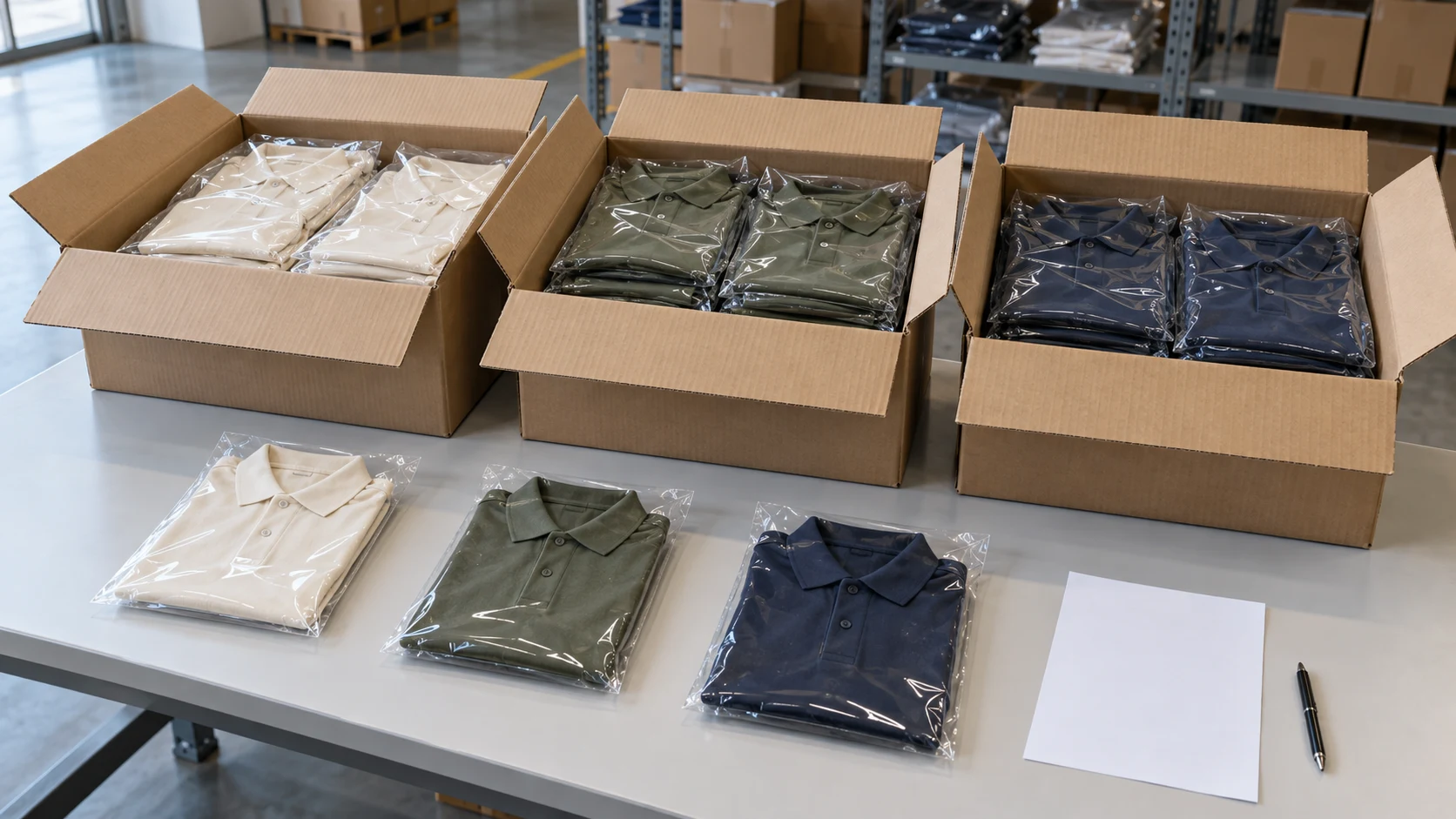
Define the lot and preserve random selection
The lot description should match goods that exist and can be accessed. Record the quantity presented, production completion status and carton references. If part of the order is still being made or is stored elsewhere, the inspector must identify the limitation. A result for one available portion should not be silently extended to the entire order.
Agree how colors, sizes and production groups are represented without allowing convenient cartons or supplier-selected “good pieces” to determine the sample. Random selection must remain consistent with the plan. If separate styles or production conditions create different risks, ask the quality owner whether separate lots or additional checks are needed before inspection.
Count defects and defective garments consistently
A garment with an open seam and a stain contains two observations but is still one garment. Plans based on nonconforming units and plans based on nonconformities use different counting concepts. Confirm the basis and how several defects or severity classes on one unit are handled before counting begins.
Use the approved critical, major and minor garment defect definitions to classify observations. Record location, extent and evidence. Inspectors should escalate an undefined condition instead of choosing a convenient category to influence the result. A sample showing no critical findings cannot establish that no such condition exists anywhere in the lot.
Read the acceptance decision correctly
In a single-sample plan, the selected sample is inspected and the applicable count is compared with the plan’s acceptance threshold. NIST distinguishes single and double sampling: a double plan can require a second sample and a decision using combined results. Taking extra pieces after a failed single-sample result is not automatically a valid double-sampling procedure.
Consider a purely illustrative instruction with 50 sampled units, acceptance at no more than one nonconforming unit and rejection at two. One counted unit meets that stated threshold; two fail it. These invented numbers demonstrate the decision logic only. They are not an ISO table lookup, a recommended apparel plan or an AQL 2.5 example.
Each required check still needs its own result. A workmanship count within limits does not close a missing test, an incorrect assortment or an unresolved specification deviation. Match measurement findings to the approved measurement methods and tolerances, and record the measurement sample separately when its scope differs.
What should an AQL garment inspection report contain?
- Inspection date, location, inspector and order references.
- Defined lot size, available quantity and production or packing status.
- Standard, edition, inspection level, severity and sampling type.
- Sample size, selection record and inspected color-size coverage.
- Counting basis, defect classes and acceptance/rejection numbers.
- Observed counts with garment references and clear photographs.
- Separate results for measurements, functional checks, labels and packaging.
- Unavailable tests, inaccessible goods and other scope limitations.
- Overall result, unresolved decisions and responsible release owner.
Compare the report with the approved sample and specification revision, not an outdated attachment. For packaging discrepancies, reconcile the quantities and identifiers through the carton-mark and packing-list process. Photos help explain observations but do not replace the count or sampling record.
What happens after a failed inspection?
Hold the affected lot under the agreed release process. Ask for the defect scope, containment action, correction method and verification plan. Repairing only the pieces found in the sample leaves the remainder of the lot unresolved. The quality owner should determine the appropriate sorting, rework or other disposition for the identified problem.
Keep the original report and document the corrected lot identity before reinspection. Record who approved the new inspection, what work was completed and which procedure applies. Do not repeatedly draw fresh samples until one happens to pass. Where the chosen scheme uses switching rules, maintain the necessary inspection history and apply those rules consistently.
Update the production status report with held, sorted, repaired, reinspected and released quantities. Connect the revised shipment forecast to the actual correction and verification work, so the buyer can assess the delivery effect.
Questions buyers often ask
Does AQL 2.5 mean 2.5% of the order can be defective?
No. An AQL value is part of a sampling scheme. It does not set a simple percentage allowance for each shipment or establish the actual defect rate of a passed lot.
Is one inspection level suitable for every apparel order?
The buyer and quality owner should choose the plan for the order, inspection objective and applicable scheme. Record the agreed level rather than assuming a familiar default covers every product and check.
Can a passed inspection replace material or safety testing?
Only checks actually included and completed are supported by the report. Required material, performance or compliance evidence must be obtained under its own defined scope; visual sampling cannot establish an untested property.
Prepare the inspection brief with the order
Agree the AQL garment inspection brief before the inspection date. Send Yinuo Apparel the order quantity, style and color-size breakdown, current specifications, defect library, proposed sampling procedure, test scope and shipment target. Ask for readiness, access, reporting and release responsibilities to be confirmed in writing.