
Bulk fabric shade band approval should identify which production fabric is acceptable and which rolls may be used together. An approved lab dip establishes a color target; it does not automatically release every bulk dye lot for cutting. Before production fabric is allocated, compare traceable samples with the agreed standard, record the evaluation conditions, and issue a decision that names the covered lots, rolls and any segregation requirements.
For apparel buyers, the practical risk is not only an obviously wrong color. Two rolls may each look reasonably close to the target yet look different when their panels meet in one garment. This guide proposes a buyer-facing approval record for solid-color fabrics. It is not a universal color tolerance, laboratory method or substitute for a brand’s technical requirements.
What is a fabric shade band?
A fabric shade band is a set of physical samples used to communicate a reviewed range of color variation. Its usefulness depends on the accompanying record: what each sample represents, which standard it was compared against, and whether the range is accepted. A collection of bulk swatches is a submission, not an approval, until an authorized reviewer makes that decision.
Keep it distinct from lab dip approval, which supports color development before bulk production. Also distinguish a shade band from a shade group: the latter should identify material the production team is permitted to allocate together under the agreed rules. Neither term should hide the actual scope of release.
Request traceable bulk samples, not anonymous cuttings
Ask the mill or garment supplier to connect each submitted cutting to the fabric article, colorway, dye lot and roll identifier. Record its sampling location and production state, including whether relevant finishing is complete. A submission from unfinished material should not silently become approval of the finished fabric.
Agree how the sampling plan will represent variation across the material. If the concern is variation across width or along a roll, one unlocated cutting cannot answer it. Ask the supplier to explain the coverage and limitations of the proposed samples. Do not assume that a single swatch represents all rolls bearing the same dye-lot number.
The following is a practical record template, not a prescribed industry form:
| Record field | What to specify | Decision it supports |
|---|---|---|
| Standard reference | Physical or digital standard ID and current revision | Which target governs the review |
| Material identity | Fabric article, colorway, finish, lot and roll IDs | Which production material is covered |
| Sample coverage | Sampling locations, dates and represented quantities | Whether further sampling is needed |
| Evaluation basis | Viewing conditions, measurement method where used, and agreed limits | How acceptance is assessed |
| Allocation rule | Approved shade groups and prohibited combinations | What may be cut and assembled together |
| Release decision | Accepted, conditional or held; owner and date | Whether the next operation may proceed |
Agree the viewing and measurement conditions first
Use a shared evaluation procedure rather than comparing one person’s desk photo with another person’s office lighting. Define the light sources, background, sample presentation and orientation used for visual review. Where instrumental measurements are part of the specification, also record the color-difference formula, instrument settings, sample preparation and acceptance limits.
Datacolor’s textile color-management guidance explains why measurement and controlled visual assessment work together: texture, gloss, construction and viewing conditions influence appearance. It also describes metamerism, where a pair can match under one light source but differ under another. Review the light sources relevant to the buyer’s specification instead of treating one favorable viewing condition as complete evidence.
A report that says only “Delta E passed” is incomplete for a purchasing decision. Ask what was measured, against which reference, with which method and limit. This guide deliberately provides no universal Delta E cutoff: the applicable requirement must be agreed for the material, color and program. A numerical pass should not erase an unresolved visual disagreement; record and investigate it.
Review body fabric and visible trims as a combination
A sweatshirt body and its rib cuff can carry the same color name while presenting different surfaces. Review the actual intended combination, not two isolated approval messages. State whether the design requires a close visual match or an intentional tonal contrast. That distinction belongs in the brief before the supplier sources the trim.
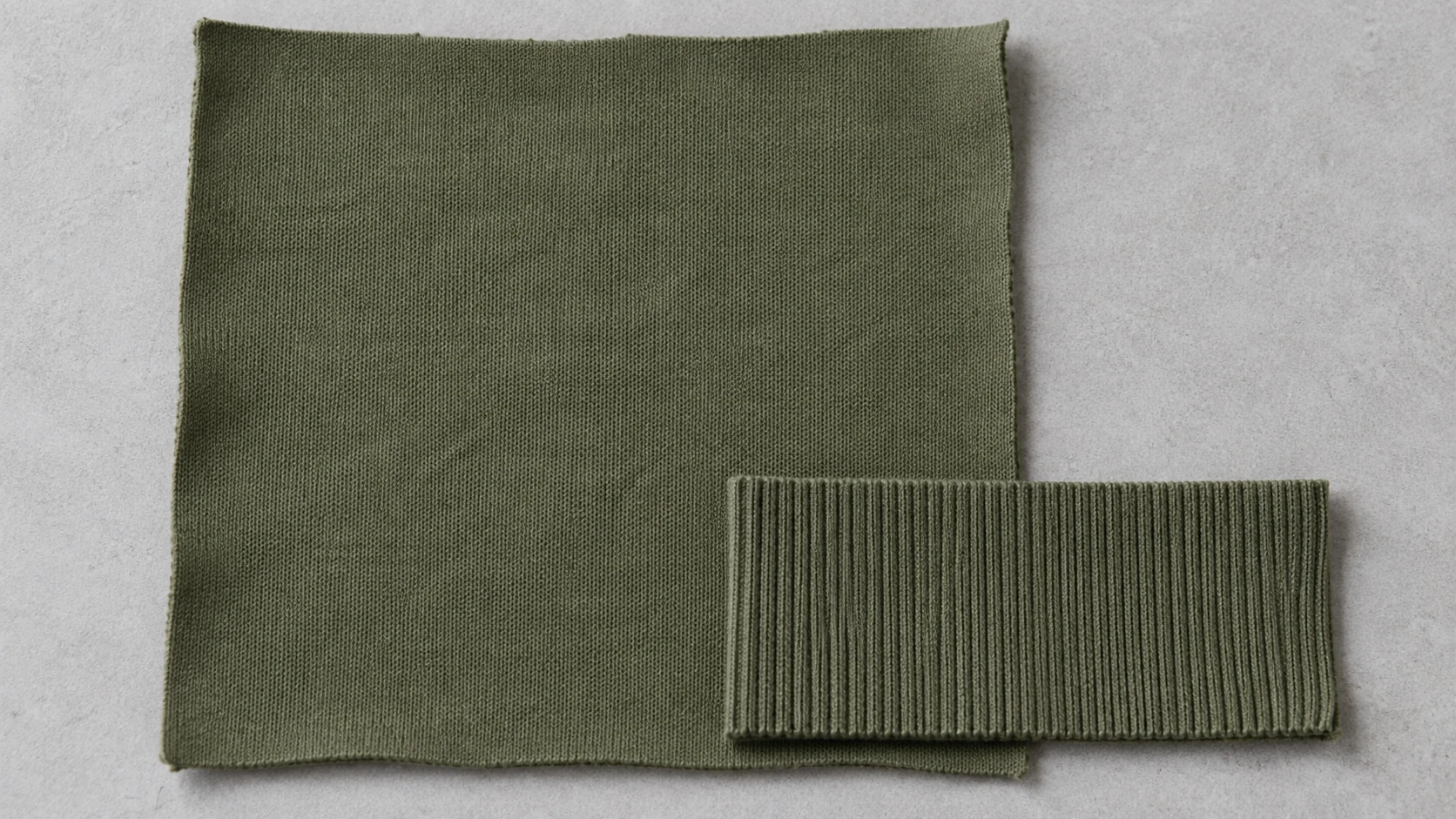
Connect the color decision to the rib trim specification and identify the selected component in the apparel bill of materials. If a supplier changes the fabric construction, finish or trim source, check whether the earlier combination approval still applies. Do not transfer it solely because the replacement uses the same color code.
Turn shade band approval into a cutting instruction
Write two separate conclusions: whether the material is acceptable against the target, and whether the proposed lots or rolls may be mixed within a garment or matching set. A decision that addresses only the first question leaves the cutting team to guess the second.
Consider a hypothetical order with two accepted shade groups. The buyer might permit both groups for the order but require all visible panels within each garment to remain within one group. For a coordinated top-and-bottom set, the restriction might also cover the paired pieces. These are examples of allocation rules to agree, not automatic permission to accept a mismatch.
Ask the supplier to show how the approved group remains identifiable through spreading, cutting, bundle handling and assembly. Include replacement panels and recuts in the plan; they should not be pulled from an unidentified leftover roll. Keep the retained physical references with the production approval records, so later questions can be traced to a specific decision.
When the submission is outside the agreed range
Hold the affected material while the buyer and supplier resolve disposition. Identify the quantity, impacted styles and proposed correction. If reprocessing is proposed, ask which other properties need checking afterward and request fresh approval evidence. If a concession is considered, document its exact scope and authorized owner; a delivery deadline is not itself an acceptance criterion.
Before closing the review, resolve four questions: Is the reference current? Are all released rolls identified? Are mixing restrictions actionable? Is any condition still open? An approval email that cannot answer these questions is not yet a clear cutting release.
Can photos replace physical shade approval?
Ordinary phone photos are useful for showing sample identities and discussing an issue, but should not become the sole color standard. Camera processing, lighting and displays can alter apparent color. Use the agreed physical and/or controlled digital evaluation workflow, and keep photos as supporting communication unless the buyer has explicitly validated a different process.
For bulk fabric shade band approval with Yinuo Apparel, share your fabric article, color reference, planned quantity, garment or set configuration, and required evaluation conditions. Include any existing bulk-lot information and state who is authorized to release color. Those inputs make it possible to discuss both acceptance and production allocation without relying on “close enough.”