
A private label clothing launch plan should work backward from stock that is received, checked and ready to sell—not from the date garments leave the factory. Connect assortment decisions, sample approvals, production, inspection, transport and warehouse intake in one schedule. Give every release point an owner and an evidence requirement before committing to a public launch date.
The 12-week framework below is an illustrative planning exercise for a small adult apparel collection using an established product direction. It is not a standard industry lead time, a supplier quotation or a delivery promise. Custom fabric, repeated fitting, special finishes, testing, factory availability and international transport can all require a longer schedule. Replace each example window with dates confirmed by the people doing the work.
First define what “launch-ready” means
Choose a concrete finish line: the correct stock is available at the intended fulfillment location, incoming checks are closed, product information is accurate and orders can be dispatched. Factory completion, shipment departure, warehouse receipt and retail availability are separate milestones. Mixing them can make a schedule look achievable while leaving no time to resolve shortages or receiving errors.
Start with the sales market, product category, launch assortment, quantity by color and size, target retail window and delivery destination. Decide who can approve fit, artwork, commercial changes and shipment release. A founder who must approve everything while traveling is a schedule dependency just as much as fabric availability.
A 12-week private label clothing launch plan
Use these windows to structure a supplier discussion, not to impose unverified dates. Work can overlap only where its inputs are stable. For example, a product-page template can be prepared early, but its final measurements and material claims must follow the approved product.
| Illustrative window | Work and owner | Evidence needed to move on |
|---|---|---|
| Weeks 1–2 | Buyer and supplier define assortment, specifications and feasibility | Agreed brief, quantity matrix, open-issue list and dated schedule |
| Weeks 3–4 | Development team reviews samples, fit and materials | Recorded comments and approved revisions; extra rounds added if needed |
| Week 5 | Buyer closes the production-release gate | Approved reference sample, specifications, labels, packing and commercial scope |
| Weeks 6–8 | Supplier executes the confirmed production plan | Actual progress, material availability and exception updates against milestones |
| Week 9 | Quality team inspects; buyer decides release | Inspection evidence and closure of any blocking issues |
| Weeks 10–11 | Logistics and warehouse teams arrange movement and receiving | Confirmed transit plan, required documents and inventory reconciliation |
| Week 12 | Buyer completes launch-readiness review | Sellable stock, accurate product pages and tested fulfillment process |
The example production and logistics windows are placeholders, not claims that those activities take three or two weeks. If confirmed transit alone exceeds the allowance, extend the calendar or reconsider the launch scope before promising availability. The final week is not a universal buffer for every upstream delay.
Freeze a manageable assortment before sampling
A first drop becomes harder to coordinate when every new idea creates another fabric, fit block or decoration process. Separate essential launch styles from later additions. Record what is shared across the collection and what needs independent approval. Two colors of one style may still require separate color and material decisions.
Use a style–color–size quantity matrix rather than one total order quantity. Check how the assortment interacts with MOQ planning by color and size. Ask which inputs are available, which require procurement and which remain tentative. Do not describe a material as reserved unless the supplier has actually confirmed the reservation and its conditions.
Make sample approval a release gate
A sample delivery date is not an approval date. Allow time for receipt, review, consolidated comments, revision and confirmation. Identify which sample answers which question: fit, grading, appearance, decoration or production readiness. The apparel sampling timeline guide covers this development sequence in more detail.
Before releasing bulk production, confirm the current specification version, approved physical reference, measurements and tolerances, material and color references, artwork placement, labels and packaging instructions. Assign an owner to every unresolved item. “Approved except for…” should say exactly which activity may proceed and which must wait.
For an illustrative decision, suppose fit is accepted but the chest artwork remains open. The teams might continue product-page layout work while withholding decorated production. That is a scoped decision, not approval of the entire style. Record the authorization rather than relying on a message that simply says “looks good.”
Run labels, packaging and product content in parallel
Start market-specific labeling review early enough to change artwork before labels are produced. For the United States, the FTC textile labeling guide explains that most covered textile products need fiber content, country of origin and the identity of a responsible business. Its care labeling guidance addresses care instructions. These are U.S.-specific references, not a complete compliance checklist for every product or market.
Have the responsible importer or compliance adviser confirm the applicable requirements for the actual product and destination. Children’s garments, protective clothing and other specialized categories need a separate review rather than this general adult-apparel framework. Do not invent fiber, origin, care or performance statements to finish the design.
Prepare SKU mapping, product-page structure, photography requirements and warehouse instructions alongside development. Finalize customer-facing claims against the approved specification and supporting evidence. Check the complete packing configuration using a retail-ready apparel packaging checklist, including how one sellable unit maps to the warehouse record.
Protect the receiving window
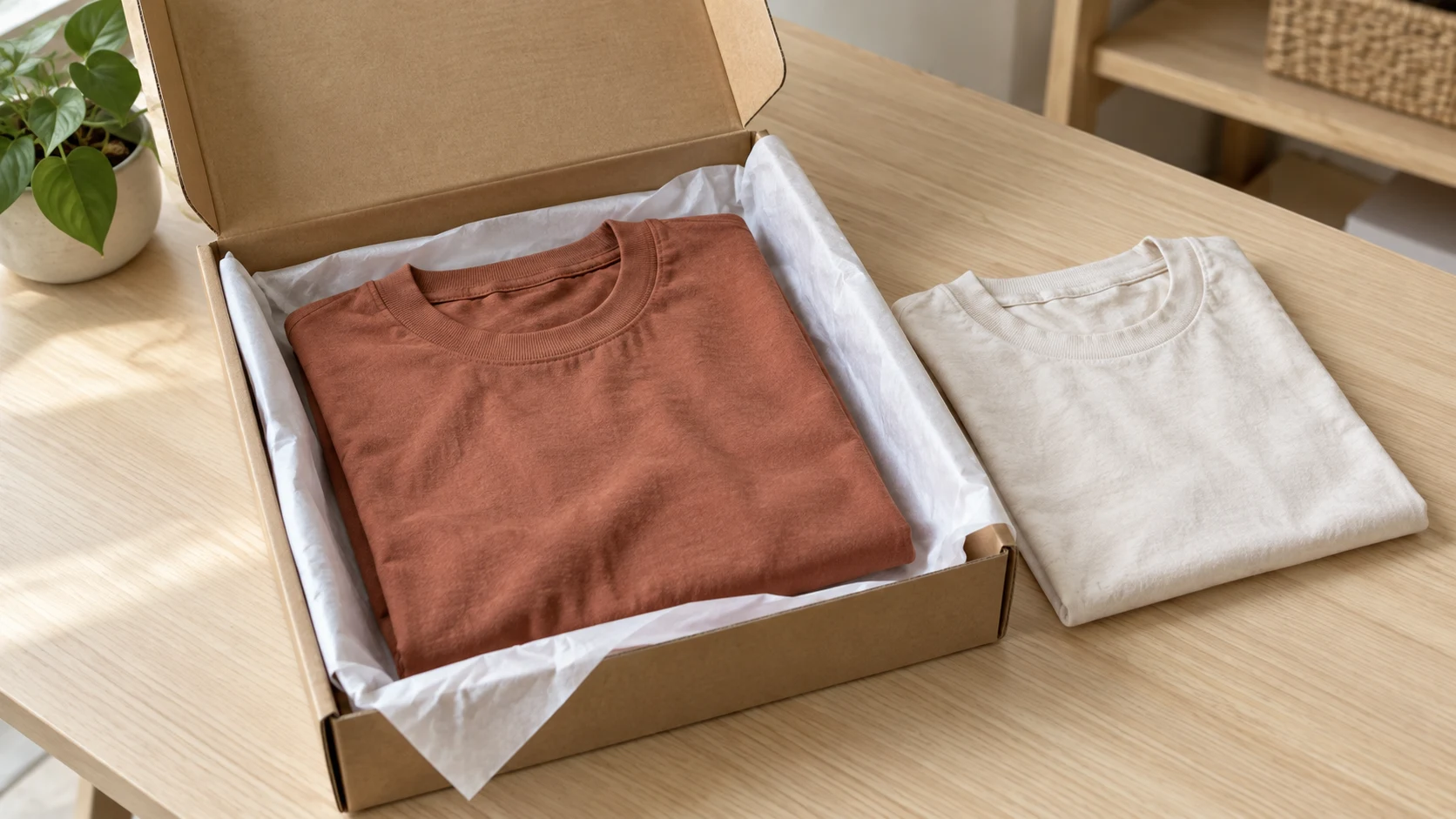
Keep inspection, shipment authorization, transport and receiving as separate rows in the plan. Agree the inspection scope and response to a failed result before inspection day. An AQL inspection plan supports an acceptance decision; it does not remove the need to close defects or authorize shipment.
Ask the logistics provider for a route-specific estimate and identify which events can change it. Confirm responsibility for documentation, import arrangements and warehouse appointments. At receipt, reconcile quantities and variants, isolate discrepancies and make only verified inventory available for sale. Keep time for corrections between arrival and the customer-facing launch.
When a milestone slips, change the plan explicitly
Review the critical dependency first: what cannot start until this issue is resolved? Record the affected styles, the latest feasible decision date, the responsible owner and the next evidence required. Ask for a revised downstream schedule instead of assuming a lost week can be recovered during inspection or transport.
Possible responses include reducing the first-drop assortment, moving an unready style to a later release or changing the launch date. Any split shipment or alternative transport proposal needs its own cost and feasibility review. Never treat a shorter calendar as permission to skip a required approval or conceal a product change.
Questions buyers ask before setting a launch date
Can every private label collection launch in 12 weeks?
No. This is a planning framework, not a feasibility result. Obtain confirmed development, procurement, production and logistics dates for your assortment. Extend the plan when those dependencies do not fit.
When should launch photography happen?
Prepare the shot list early. Use an approved representative garment for final product photography, and recheck the images if production changes a visible detail. Development samples can support internal planning without being presented as the finished customer product.
What should a supplier receive first?
Send product references, the style–color–size matrix, material direction, available technical files, decoration requirements, sales market, receiving location and target launch window. Mark open decisions clearly. Ask for a private label clothing launch plan with named dependencies and approval dates—not only a bulk completion estimate.
For a feasibility discussion with Yinuo Apparel, share your assortment brief and target receiving window. Distinguish requirements that are fixed from options that can change, so the next discussion can focus on a realistic development and delivery sequence.