

Check side-seam twist by comparing the same garment before and after an agreed washing-and-drying procedure, using a defined measurement method and an acceptance limit set for the style. Keep the garment relaxed during review, identify the fabric and production route, and record the result for each sample. Chest width and body length alone will not tell you whether a side seam has rotated toward the front.
For a buyer, the problem often starts with a good-looking T-shirt sample and a washed sample that hangs differently. The next decision is whether to approve production, request missing evidence or investigate the construction. A useful review separates what changed from why it changed, so the supplier can address the right issue.
What does side-seam twist tell you?
Side-seam twist describes a change in the seam’s position around the garment body. On a conventional side-seamed T-shirt, a seam that sat at the side may travel toward the front or back after laundering. Buyers may also hear terms such as torque or spirality. Ask the supplier what it is measuring rather than assuming those words identify the same calculation.
First confirm the intended construction. An intentionally curved panel seam should be assessed against its design reference. A tubular body without side seams needs a suitable alternative assessment agreed with the laboratory. The workflow here is aimed at garments with conventional body side seams; it is not a substitute for selecting the applicable test method.
Keep shrinkage approval alongside the twist review. A garment can meet its length and width limits while its seam alignment is unacceptable. Conversely, a seam-position concern does not establish how much the garment has shrunk.
Request a report that matches the question
The AATCC standards list distinguishes garment seam twist, fabric skew change and garment dimensional change. These report types answer related but different questions:
| Buyer question | Method listed by AATCC | How to use the evidence |
|---|---|---|
| Did garment seam alignment change with laundering? | TM207: garment seam twist before and after home laundering | Ask for results tied to the submitted garment samples. |
| How did the fabric’s skew change? | TM179: fabric skew change after home laundering | Use the fabric result to inform investigation and material selection. |
| How did garment dimensions change? | TM150: garment dimensional change after home laundering | Review fit-related dimensions separately from seam alignment. |
Have the laboratory confirm the applicable method, edition and test conditions. A fabric report supports the material review, but it should not automatically close finished-garment approval. Likewise, a dimensional-change report should not be presented as a seam-twist result.
If the supplier performs an internal screening check, ask it to describe that procedure and label the result accordingly. A photograph with a ruler can support a discussion; it does not establish that a named laboratory method was followed.
Keep a baseline that can be compared after washing
Identify each sample by style, size, color, fabric lot and sample stage. Record whether it represents the intended fabric finishing, cutting and sewing route. Add the current pattern revision and any garment wash already completed before the baseline review. This makes it possible to connect a result to the garments being considered for production.
Before laundering, photograph the whole garment and the lower side-seam-to-hem junctions. Define left and right as worn by the customer. Keep the front/back orientation and camera view consistent in the later photographs, and show enough surrounding fabric to make the seam’s position clear.
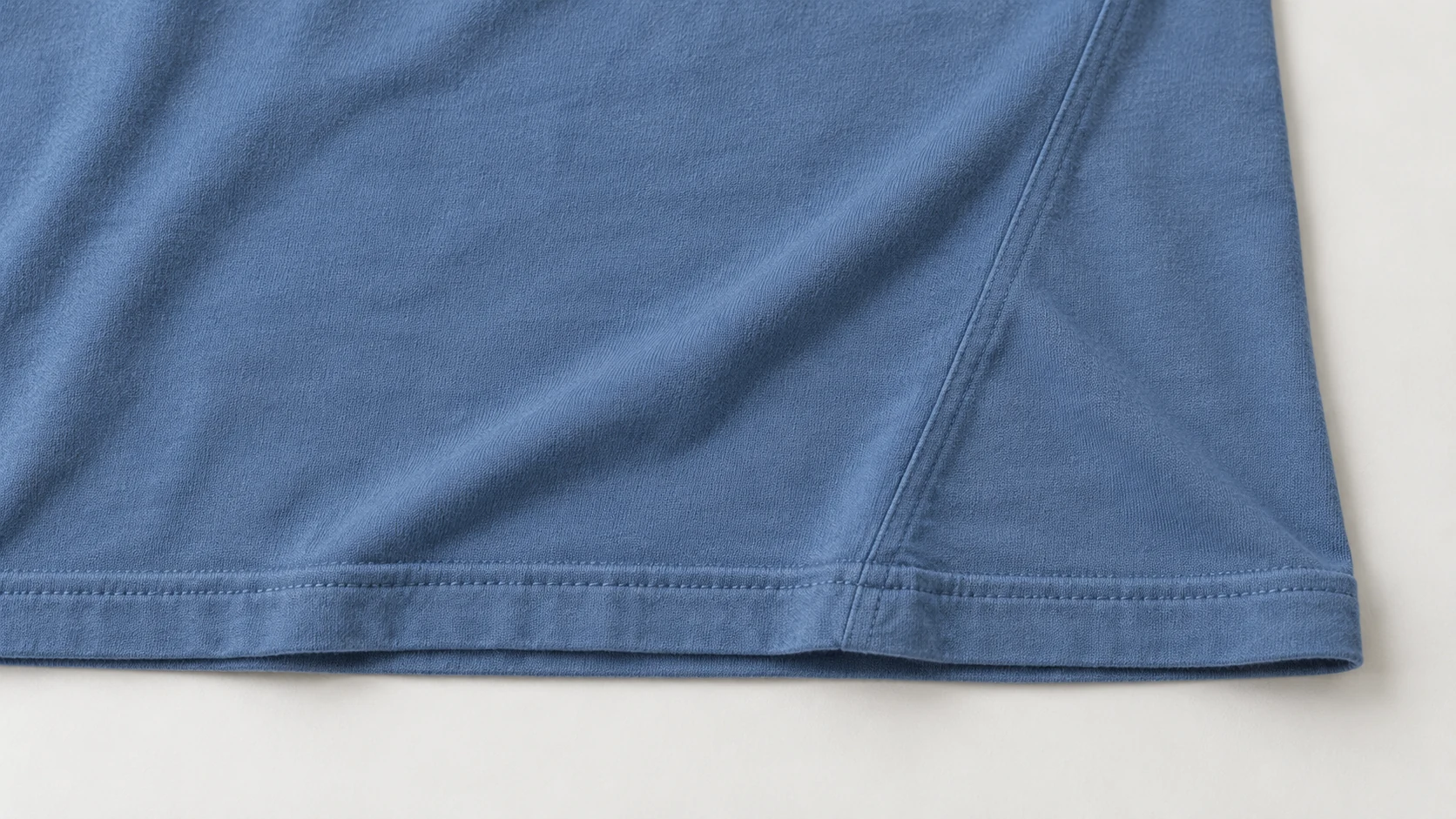
For the test itself, follow the selected method’s preparation and handling instructions. During a buyer’s visual review, avoid pulling the seam back to the side merely to make the garment look straight. Record any pressing or reshaping and whether the agreed procedure permits it. Otherwise the photographs may conceal the change the review is meant to assess.
Agree the limit before reading the result
Write the wash program, drying procedure, cycle count, sample coverage and acceptance criteria into the approval brief. Use the intended care instructions and customer specification to guide that agreement. If another party supplies a percentage, ask for its method and calculation basis before comparing it with your own result.
There is no useful universal pass percentage to insert into every knitwear order. In its technical Q&A on skewing, CottonWorks notes that a longer seam can show greater physical displacement at the same percentage of skew. That helps explain why the visible effect should be reviewed on the actual garment proportions.
Request individual sample results and the stated pass/fail rule, including any required averaging. An overall average may leave a visibly distorted sample unexplained. Keep the original observation and the after-laundering result identifiable, so reviewers can distinguish an initial alignment issue from a change during care.
Add these fields to the sampling tech pack or linked test brief. Measurement tolerances for chest width and body length should not silently become the acceptance criteria for seam twist.
Investigate a failed sample before choosing a correction
A rotated side seam is an observation, not a complete diagnosis. Ask the supplier to review the fabric condition, relaxation and finishing history, cutting orientation and garment assembly. Use the seam-construction specification to establish what was intended, then compare it with the sample and available production records.
Do not accept a cosmetic straightening step as the only evidence that the issue is resolved. The same CottonWorks Q&A explains that cutting to disguise fabric skew does not necessarily prevent seams from skewing after washing. Ask what changed in the material or production route and verify a new representative garment under the agreed conditions.
- Which sample or lot showed the issue, and was it present before laundering?
- What proposed change addresses the investigated cause?
- Does the change affect fit, appearance, fabric hand or the agreed construction?
- Which new sample will be tested, and who will approve the result?
Close side-seam twist approval with traceable evidence
Record the decision as approved, awaiting evidence or requiring correction. Link it to the sample IDs, test report, review photos and specification revision. Keep the retained references within your golden-sample system, with their washed or unwashed status clearly identified.
For a side-seam twist review with Yinuo Apparel, send the garment specification, fabric details, before-and-after photos, intended care instructions and customer test requirements. Include the existing report if available. Those inputs allow the team to discuss the appropriate sample and verification steps for your project before bulk approval.